
How to Childproof Your Home in 2026: A Room-by-Room Checklist That Costs About $134
Short answer: how to childproof your home is to start with the stairs, then do the two fixes that cost nothing, and only then buy the rest — room by room, before your baby can crawl. Falls, tip-overs, poisons, scalds and unsafe sleep account for most of the serious injuries at home, and the whole job costs about $134 in parts for a typical three-bed home. The two most important fixes — turning the water heater down and clearing the crib — cost nothing at all.
The worked example below is for a typical three-bedroom, two-storey home with one baby approaching crawling age. Prices are real Amazon US listings from November 2026; safety figures come from Safe Kids Worldwide, the CPSC and the AAP. Your home will differ in detail; the order of work will not. A home feels safe because it is familiar, but Safe Kids Worldwide reports that six children die every day from an injury in the home, and about 10,000 go to an emergency department each day for the kinds of injuries that commonly happen at home. Almost all of it is preventable — known hazards with known fixes, not freak accidents — and the danger is concentrated in the youngest children, because toddlers aged one to four can move, climb and reach but cannot yet judge risk or call for help.
Start With the Stairs: The One Fix You Cannot Skip
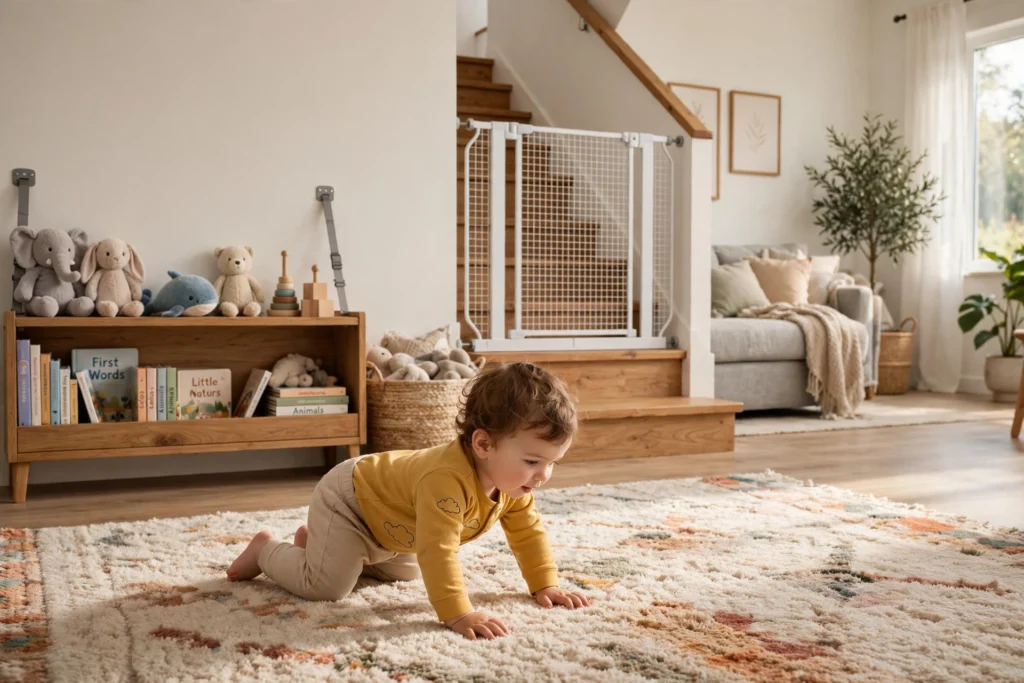
A pressure-mounted gate is fine at the bottom of the stairs and in doorways, but the top needs a hardware-mounted gate, screwed into the wall or banister: a pressure gate can be pushed over by a child leaning on it. The worked example budgets for both — a Regalo Easy Step pressure-mounted gate for the bottom, $44.98 on Amazon in November 2026, and a Munchkin Easy Close hardware-mounted gate for the top, about $45. Together they are $90 of the $134 total, the dearest items in the whole job.

Fit the top gate before your baby can crawl, not after the first near miss. Keep the gate closed every time — a gate left open is decoration — and do not treat it as a substitute for watching a child on the stairs. Check balcony and landing railings too: a child should not fit their head through the balusters, and climbable furniture should never sit beside a railing.
The Two Fixes That Cost Nothing
Two of the most important fixes in this article cost nothing, and both take minutes. First, set the water heater to 120°F (49°C), as the CPSC recommends. The numbers explain why: at 140°F, water causes a third-degree burn in about six seconds; at 120°F, it takes about five minutes. The setting protects every hot tap in the house. Still test the water by hand before bathing a child — 120°F is safer, not safe.
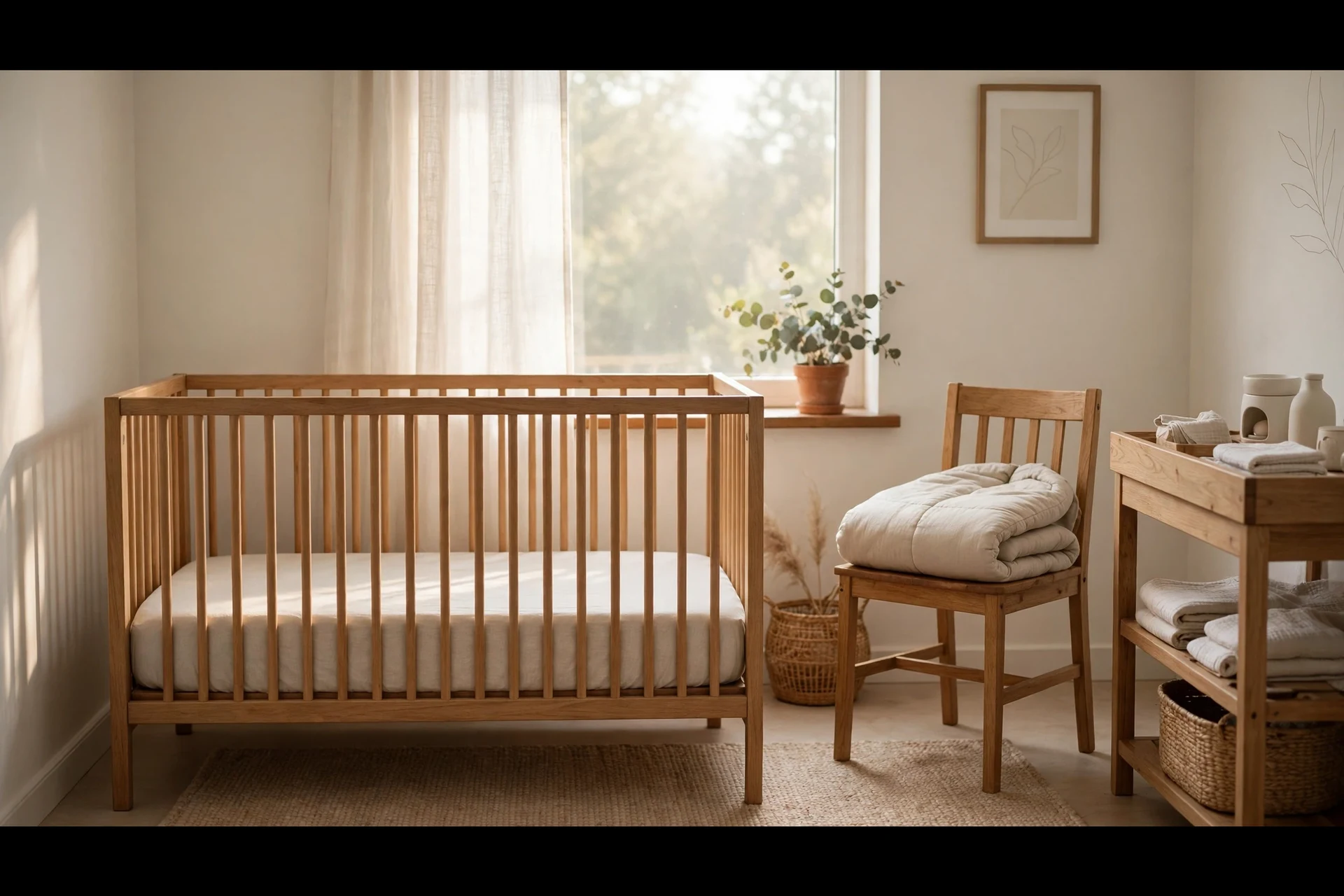
Second, clear the crib. The American Academy of Pediatrics recommends a bare sleep space: baby on their back, on a firm, flat mattress, with a fitted sheet only. No pillows, no loose blankets, no bumper pads, no positioners, no stuffed animals. The AAP also recommends room sharing without bed sharing for at least six months, ideally a year. The CPSC banned the sale of padded crib bumpers in 2022, and the AAP advises against mesh bumpers too.
Check the crib itself: slats no more than 2⅜ inches apart, no drop-side rail, no missing parts, and a mattress that fits tightly with no gap a finger can slip into. Check the CPSC website for recalls, especially if the crib is second-hand. A sleep sack replaces a blanket. Keep the crib away from the window — cord hazard and fall risk both.
Anchor the Heavy Things
The most dangerous object in most living rooms is heavy, tall and unanchored — not sharp or hot. The Consumer Product Safety Commission counted about 17,800 tip-over injuries treated in emergency departments each year in 2020 to 2022, and 217 reported tip-over deaths between January 2013 and July 2023, 71 percent of them children. Children aged one to four account for 60 percent of child tip-over injuries, and 44 percent of the deaths happened in bedrooms.
Anchor everything tall to the wall: the television, the bookcase, the dresser, the chest of drawers. Anchor kits cost under $10 each, according to the CPSC’s Anchor It campaign, and the worked example budgets $20 for two kits, one for the television unit and one for the bookcase. Screw them into a wall stud, and keep heavy items low and toys off the top. New dressers made after 1 September 2023 must meet the CPSC’s mandatory STURDY standard and resist tipping under a 60-pound child load. Anchor them anyway — the standard is a backstop, not a substitute.
Then deal with the cords: tie up blind and curtain cords well out of reach, or fit a cord cleat — a looping cord is a strangulation risk. Move lamps behind furniture and anything breakable above toddler height, and keep the television on low, stable furniture made for it, never on a tall dresser a child can climb.
Kitchen: Locks, Heat and Poisons
The kitchen is the busiest room and the most dangerous, because it packs three hazards into one small space: sharp things, hot things and poisons. Fit locks on every low cabinet and drawer holding cleaning products, medicines, sharp knives, plastic bags or alcohol. A 48-piece baby-proofing kit — cabinet and drawer locks, outlet covers, U-shaped locks and door knob covers — costs $8.99 on Amazon in November 2026, list price $9.99, and covers the locks for the whole house, not just the kitchen.
Move the poisons before you lock them away. Dishwasher tablets, bleach, laundry pods and medicines belong on a high shelf or in a locked cupboard, never under the sink at toddler height. Laundry pods look like sweets and can badly hurt a child who bites one. More than half of all poison exposures happen to children under six. Save the number in your phone and on the fridge: Poison Control, 1-800-222-1222, free and answered around the clock in the US.
Then deal with heat. Turn pot handles inward, keep the kettle back from the counter edge, and use the back burners first. Fit a stove guard if your hob has knobs at the front. Corner and edge guards go on the sharp corners of the counter and table; a 16.4-foot edge and corner guard set costs $14.99. Cover the outlets too — the kit includes covers — most of all in the kitchen, where a child is on the floor near a socket while you cook.
Bathroom and Windows: The Checks People Skip
The bathroom has two hazards that are easy to miss because they are invisible until they hurt: water and medicines. Never leave a child unattended in the bathroom, even for a second: a child dies from drowning in a bathtub every week. A bath seat is not a substitute for an adult in the room. Keep medicines, razors and cosmetics in a locked cabinet, not on the counter. Medicines are the leading cause of poisoning deaths in young children, and a child who can open a bathroom cabinet can open a pill bottle.

Windows deserve their own check in every bedroom. About 3,300 children a year are injured falling out of windows, according to Safe Kids Worldwide. Fit window guards or window stops that limit how far a window opens — four inches is the usual limit — on every window above the ground floor, and keep furniture away from windows so a child cannot climb up to one. A window screen is not a safety device and will not hold a child’s weight.
Before You Buy Anything: Get Down on the Floor
Buy nothing until you have done the crawl. Get on your hands and knees in each room and look at the house from about eighteen inches off the floor — the height of a crawling baby. The hazards you find this way are the ones that matter. A dangling blind cord. A low drawer of plastic bags. A bottle of dishwasher tablets under the sink, exactly where a toddler’s hands go first.
Do it twice: once in daylight, once in the evening, when lamps are on and cords trail. Write down what you find, room by room, and fix the rooms in the order your child will reach them — nursery and kitchen first, then the living room, stairs and bathroom.
What It Costs, by What It Prevents
Here is the same worked example, priced by what each fix prevents rather than by room, for the same three-bedroom, two-storey home. Prices are Amazon US listings in November 2026, rounded to the nearest dollar.
| Hazard | Where it strikes | Fix | Cost |
|---|---|---|---|
| Fall down the stairs | Stairs | Two gates: Regalo Easy Step at the bottom, Munchkin Easy Close at the top | $90 |
| Furniture tip-over | Living room and bedrooms | Two furniture anchor kits | $20 |
| Poisoning | Kitchen | 48-piece proofing kit: cabinet and drawer locks, outlet covers, U-locks, door knob covers | $9 |
| Cuts and bumps | Whole house | Edge and corner guard set for counters and tables | $15 |
| Scalds | Bathroom | Water heater set to 120°F | $0 |
| Unsafe sleep | Nursery | Bare crib: bumpers, pillows and blankets removed | $0 |
| Total | One crawling baby, three bedrooms, two storeys | $134 |
Prices are Amazon US listings in November 2026, rounded to the nearest dollar; the two gates are the dearest items, and the two free fixes are the most important. A single-storey home drops one gate and saves $45.
That total is a floor, not a ceiling: a larger home or a second staircase costs more, and a professional service costs far more than the parts. The dearest items are the gates; the fixes that prevent the most serious injuries — the heater setting, the bare crib, the anchor kits — cost $20 or nothing. If money is tight, buy the anchors and gates first, turn the heater down and clear the crib today, and add the rest as you can.
What Not to Buy
Childproofing has its own version of the problem it solves: too much stuff, bought in a panic. Foam guards on every edge are usually overkill — guard the sharp corners at head height and leave the rest. A baby monitor watches a hazard; it does not remove one. And no product replaces supervision: a locked cabinet only works if you lock it every time.
A “safe” bottle of bleach is still bleach, and a locked cupboard beats a child-resistant cap. Buy the few proven items and fit them properly.
When to Do It: Before Crawling, Then Again at Every Milestone
Do the main job before your baby can crawl — around five to six months — not after. Crawling arrives suddenly, and a baby who could not reach the stairs yesterday can reach them today. Start with the nursery, kitchen and stairs; the fitting takes a few hours, plus the time to move poisons and medicines to high shelves.
Then do it again at every milestone. A baby who pulls up can reach the counter; a toddler who climbs can reach the top of the dresser; a two-year-old who opens doors can reach the garage and the road. Re-crawl the house every few months and re-check the fittings: adhesive locks loosen in heat, gates work loose, and a lock that beat a one-year-old may not beat a two-year-old. Childproofing is a habit you repeat until your child understands the risks — and even then, the anchors and gates stay.
Key Takeaways
How to childproof your home is to start with the stairs, then do the two free fixes, then buy the rest room by room. The gates are the dearest part at about $90 of the $134 total, but a fall is the fastest injury in the house; the heater setting and the bare crib cost nothing and prevent the injuries that are hardest to undo — a scald in six seconds at 140°F, or a baby sleeping with pillows and bumpers in the cot. Tip-overs cause about 17,800 emergency visits a year, and the anchor kits that stop them cost under $10 each.
No product replaces watching your child. Gates slow a toddler down, locks only work if you lock them, and the most useful check costs nothing: get on the floor at your child’s height and look at what they can reach. Do the main job before your baby can crawl, around five to six months, and repeat the crawl at every milestone — a lock that beat a one-year-old may not beat a two-year-old.
Frequently Asked Questions
When should I start childproofing my home?
Before your baby can crawl, usually around five to six months — not after the first near miss. Fit the top-of-stairs gate and clear the crib first, then work through the kitchen, living room and bathroom in a weekend. Re-check at every milestone: pulling up, climbing, opening doors.
How much does it cost to childproof a house?
For a typical three-bedroom, two-storey home, about $134 in parts: two gates at about $45 each, a 48-piece kit at $9, two anchor kits at $20 and an edge guard set at $15. The heater setting and bare crib cost nothing. A single-storey home saves one gate, about $45.
Do I need a baby gate at the top and bottom of the stairs?
Yes. The top gate must be hardware-mounted — screwed into the wall or banister — because a pressure gate can be pushed over by a child leaning on it. A pressure gate is fine at the bottom and in doorways. Fit the top gate before your baby can crawl, and keep it closed every time.
What temperature should I set my water heater to with a baby in the house?
120°F (49°C), as the CPSC recommends. At 140°F a third-degree burn takes about six seconds; at 120°F, about five minutes. Always test the water by hand before bathing a child, and never leave a child unattended in the bathroom, even for a second.
Are crib bumpers safe for babies?
No. The AAP advises against all crib bumpers, including mesh ones, and the CPSC banned the sale of padded bumpers in 2022. A safe crib holds a firm, flat mattress and a fitted sheet only — no pillows, loose blankets, positioners or stuffed animals. A sleep sack replaces a blanket.
Can I childproof a rented home without drilling?
Most of it, yes. The pressure gate at the bottom of the stairs, the adhesive locks in the 48-piece kit, the edge guards, the heater setting and the bare crib all need no drilling and no permanent fixings. The two exceptions are the hardware-mounted gate at the top of the stairs and the furniture anchor kits, which both need screws into the wall or a stud — ask your landlord before fitting those, and keep the fixings in place when you leave.
Sources
- Safe Kids Worldwide, “New Research Reveals Parents Unaware of Hazards in the Home” — six children die every day from an injury in the home, about 10,000 go to the emergency department each day, about 2,200 die each year; 3,300 children injured falling out of windows each year; a child dies from drowning in a bathtub every week. https://www.safekids.org/press-release/new-research-reveals-parents-unaware-hazards-home — accessed 9 November 2026.
- US Consumer Product Safety Commission, 2023 Annual Tip-Over Report, as reported by ZipBuilder, “Furniture Tip-Over Safety” — an estimated 17,800 emergency-department-treated tip-over injuries a year in 2020–2022; 217 reported tip-over deaths from January 2013 to July 2023, 71 percent children; 44 percent of deaths in bedrooms; children aged 1 to 4 account for 60 percent of child tip-over injuries. https://www.zipbuilder.com/kids-rooms/furniture-tip-over-safety.html — accessed 9 November 2026.
- US Consumer Product Safety Commission, Anchor It! campaign, as reported by DealsDMV, “Do Dressers Need to Be Anchored to the Wall?” — anchor kits mostly under $20, many under $10; mandatory STURDY stability standard (ASTM F2057-23) for clothing storage units made after 1 September 2023. https://www.dealsdmv.com/blog/do-dressers-need-to-be-anchored-to-wall — accessed 9 November 2026.
- US Consumer Product Safety Commission, Publication 5098, “Avoiding Tap Water Scalds”, as reported by Parker Air and Green Conserve — set residential water heaters to 120°F; third-degree burn in about 6 seconds at 140°F and about 5 minutes at 120°F; roughly 3,800 injuries and 34 deaths a year from tap-water scalds. https://www.parkerair.com/blog/setting-the-temperature-on-your-water-heater/ — accessed 9 November 2026.
- American Academy of Pediatrics, safe sleep recommendations, via HealthyChildren.org, “How to Keep Your Sleeping Baby Safe” — back to sleep, firm flat surface, fitted sheet only, no pillows, blankets, bumper pads or soft objects; room sharing without bed sharing for at least 6 months, ideally a year; CPSC banned the sale of padded crib bumpers in 2022. https://www.healthychildren.org/English/ages-stages/baby/sleep/Pages/a-parents-guide-to-safe-sleep.aspx — accessed 9 November 2026.
- America’s Poison Centers / Nationwide Children’s Hospital, “Poisonings and Poison Prevention” — Poison Control 1-800-222-1222, free and confidential, 24 hours a day; more than half of all poison exposures occur in children under six. https://www.nationwidechildrens.org/family-resources-education/health-wellness-and-safety-resources/helping-hands/poison-prevention — accessed 9 November 2026.
- Amazon US listings, November 2026 — Regalo Easy Step 29–38.5 inch gate $44.98; Munchkin Easy Close hardware-mounted gate about $45; 48-piece baby-proofing kit $8.99 (list $9.99); Bébé Earth edge and corner guard set $14.99. Prices change; check before buying. https://www.amazon.com/dp/B0DVF2QFQM — accessed 9 November 2026.
Educational information only, not medical advice. If your child is injured or you suspect poisoning, call 911 or Poison Control (1-800-222-1222) immediately. Prices are Amazon US listings in November 2026 and will change; safety figures are as published by the sources cited.